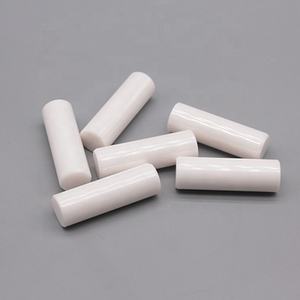
A new development in high-temperature materials processing is gaining attention in the semiconductor industry. Researchers have successfully used boron nitride ceramic discs as substrates for annealing aluminum scandium nitride films. These films are key components in next-generation electronic devices, especially those requiring stability under extreme heat.
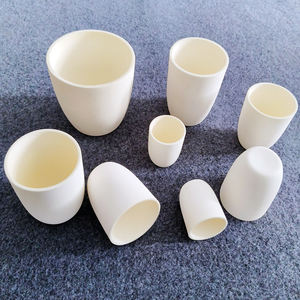
(Boron Nitride Ceramic Discs for Substrates for High Temperature Annealing of Aluminum Scandium Nitride Films)
Boron nitride stands out because it can handle very high temperatures without breaking down. It also does not react with other materials during the annealing process. This makes it ideal for supporting delicate thin films like aluminum scandium nitride. The ceramic discs stay stable even when heated beyond 1000 degrees Celsius.
The use of these substrates improves the quality of the final film. Uniform heating and minimal contamination lead to better crystal structure and enhanced electrical properties. Engineers report fewer defects and more consistent performance in devices made with this method.
Manufacturers are now testing boron nitride discs at scale. Early results show promise for mass production. The material is compatible with existing fabrication tools, which lowers the barrier to adoption. Companies working on power electronics and radio frequency components see this as a practical step forward.
This advancement comes at a time when demand for high-performance semiconductors is rising. Devices used in electric vehicles, 5G networks, and aerospace systems all benefit from materials that perform reliably under stress. Boron nitride offers a simple but effective solution to a long-standing challenge in thin-film processing.
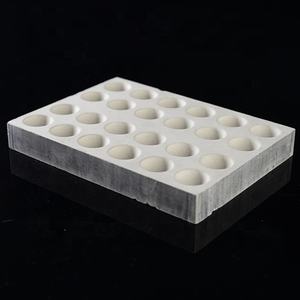
(Boron Nitride Ceramic Discs for Substrates for High Temperature Annealing of Aluminum Scandium Nitride Films)
Industry experts note that the shift to boron nitride substrates could shorten production cycles. It may also reduce waste and improve yield rates. As research continues, more applications for this ceramic material are expected to emerge in high-temperature manufacturing environments.